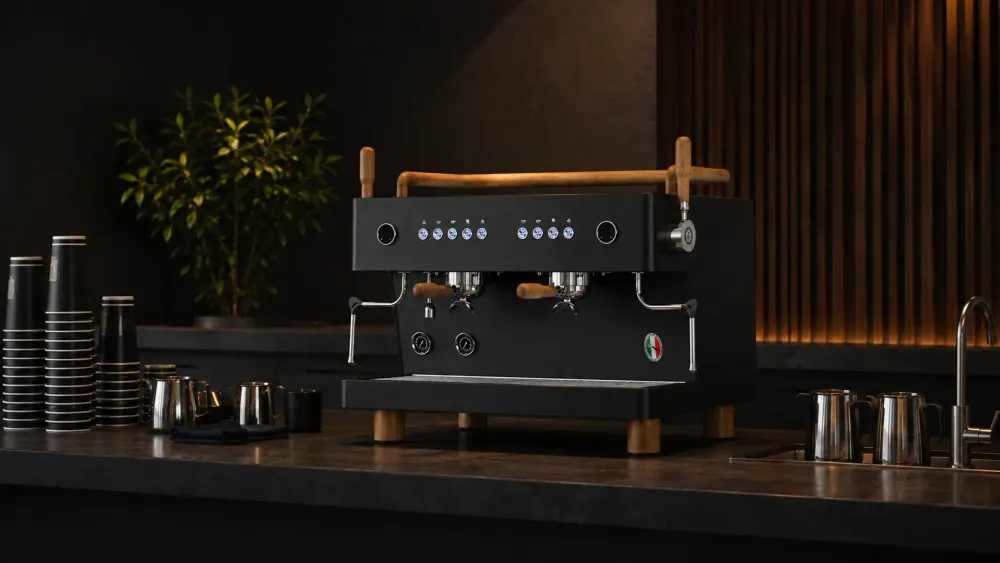
Running a high-volume café is very different from operating a small coffee counter.
When orders start coming continuously during the morning rush, your espresso machine needs to pull shots, steam milk, dispense hot water and recover quickly—all without compromising consistency.
That is why choosing the best coffee machine for a high-volume café should not be based only on brand name, appearance or price.
It should be based on boiler technology, temperature stability, steam capacity, workflow, reliability and after-sales support.
For cafés looking for these capabilities, the Ideal LaBella is designed specifically around demanding commercial coffee operations.
What Does a High-Volume Café Actually Need?
Imagine your café during peak hours.
One barista is pulling espresso shots while another is steaming milk. An Americano needs hot water, two cappuccinos are waiting, and another four orders have just appeared on the POS.
This is where the difference between an ordinary commercial machine and a machine designed for demanding workloads becomes visible.
A high-volume espresso machine should provide:
- Strong steam performance
- Consistent brew temperature
- Simultaneous brewing and steaming capability
- Multiple group heads
- Fast operational recovery
- Independent temperature management
- Consistent volumetric dosing
- Reliable internal components
- Easy cleaning and maintenance
- Readily available technical support and spare parts
Multi-boiler architecture is particularly valuable in demanding café environments because separating brewing and steaming functions helps maintain thermal performance while both operations happen simultaneously. (Rancilio Group)
Why Boiler Technology Matters in a Busy Café
The boiler system is one of the most important specifications to understand before buying a commercial espresso machine.
During peak service, your machine may be required to brew espresso and produce steam continuously.
If the machine struggles to maintain temperature or steam pressure as the workload increases, drink consistency can suffer.
This is why multi-boiler technology becomes particularly valuable for high-volume and specialty coffee operations.
Instead of relying on one system to manage every function, dedicated boilers can separate brewing requirements from steam demand.
The business advantage is simple:
More control. Better consistency. Smoother peak-hour operation.
Ideal LaBella: Built for Demanding Commercial Coffee Environments
The Ideal LaBella is a two-group commercial espresso machine developed for cafés, restaurants, hotels and coffee businesses where performance needs to remain consistent throughout demanding service periods.
At the heart of LaBella is Ideal's patented triple-boiler technology.
Instead of making the entire machine dependent on a single boiler, LaBella uses dedicated thermal systems to give the barista greater control over brewing and steaming.
This architecture makes LaBella particularly suitable for businesses where multiple beverages need to be prepared simultaneously.
1. Patented Triple-Boiler Technology
One of LaBella's most important features is its triple-boiler configuration.
In a high-volume café, espresso extraction shouldn't have to compete with milk steaming for thermal performance.
LaBella's architecture separates these functions, helping the machine maintain the stability required during continuous operation.
That becomes especially valuable during periods when both group heads and the steam system are being used repeatedly.
2. Independent PID Temperature Control
Coffee is not a one-temperature product.
Different beans, roast profiles and recipes may perform better at different extraction temperatures.
LaBella provides independent PID temperature control for each group, allowing the operator to adjust brewing temperature according to the coffee being served.
For specialty cafés, this provides another advantage.
Different coffees can be dialled in with greater precision rather than forcing every coffee through exactly the same brewing parameters.
3. Designed for Simultaneous Operation
High-volume café equipment should be evaluated under load—not when making one espresso.
LaBella is designed for situations where the machine may need to handle:
Group 1 + Group 2 + Steam + Hot Water
within the same busy workflow.
That is a much more realistic test of a commercial espresso machine than pulling one perfect shot in a showroom.
When choosing a machine for a busy café, ask the supplier to demonstrate simultaneous operation before purchasing.
4. Adjustable Pre-Infusion
Pre-infusion can influence how evenly the coffee puck is saturated before full extraction pressure is applied.
LaBella allows the operator to adjust pre-infusion, giving cafés greater control when dialling in different coffees.
For a café serving specialty coffee, this means the machine isn't simply producing espresso—it gives the barista more control over how that espresso is extracted.
5. Adjustable Steam Pressure
Milk beverages can represent a significant percentage of sales in Indian cafés.
During a busy service, steam performance therefore becomes extremely important.
LaBella provides adjustable steam pressure, allowing the café to configure the machine according to its workflow and milk-steaming requirements.
Whether your menu is dominated by cappuccinos, flat whites, lattes or other milk-based beverages, the steam system needs to keep pace with espresso production.
6. Adjustable Water Flow
LaBella also provides adjustable water-flow control, adding another brewing parameter for cafés that want greater control over extraction.
This combination of:
Temperature + Pre-infusion + Water Flow + Steam Pressure
gives the operator greater flexibility to configure the machine according to the café's coffee and workflow.
High Volume Doesn't Mean You Should Compromise on Coffee Quality
A common misconception is that a high-volume café simply needs a powerful machine.
Power is important—but repeatability is equally important.
The first espresso at 8:00 AM and the espresso served during the busiest part of the afternoon should follow the same recipe as closely as possible.
That requires thermal stability.
Independent temperature management and multi-boiler systems are increasingly used in commercial machines precisely because they allow brewing conditions to remain better controlled while steaming and brewing occur simultaneously. (Rancilio Group)
For a café, consistency has a direct commercial consequence:
Customers should not receive a different-tasting coffee depending on how busy the café is.
Two Groups Can Improve Peak-Hour Workflow
For a genuinely busy café, a two-group machine offers an important operational advantage.
Two baristas can work more efficiently, or one experienced barista can manage multiple extractions simultaneously.
For example:
Group 1: Double espresso for two cappuccinos
Group 2: Espresso for an Americano
Steam: Milk for the cappuccinos
Hot Water: Americano preparation
All of these functions can overlap during service.
This is why café owners should evaluate machines according to peak-hour workload rather than simply total daily cup count.
Two cafés may both sell 250 coffees per day.
But if one sells 100 of those coffees between 8 AM and 10 AM, its equipment requirement can be significantly more demanding.
Energy Efficiency Matters Too
A high-volume machine doesn't necessarily operate at maximum demand every hour of the day.
There may be intense morning and evening periods with quieter hours in between.
LaBella includes an energy-saving capability that allows one group to be switched off when the full two-group capacity isn't required.
For operators, this creates a more practical relationship between capacity and actual demand.
Use both groups when business is busy.
Reduce unnecessary operation when demand falls.
Stainless-Steel Boilers and Copper Internal Piping
Commercial equipment is an investment, and internal construction matters.
LaBella uses stainless-steel boilers and copper internal piping, supporting its positioning as a machine engineered for commercial operation rather than simply designed to look premium on the counter.
When evaluating any espresso machine, café owners should ask what is inside the machine, not only what is visible outside.
Why After-Sales Service Matters Even More for High-Volume Cafés
For a café selling a large number of coffees every day, machine downtime can become expensive very quickly.
Imagine your espresso machine being unavailable for an entire Saturday.
The real loss isn't simply the cost of the spare part.
It can include:
- Lost coffee sales
- Lost food sales
- Refunds or cancellations
- Customer dissatisfaction
- Delivery-platform disruption
- Staff downtime
This is why after-sales service should be considered before purchasing the machine.
Ideal Coffee Machines backs its equipment through its service infrastructure and spare-parts availability, helping businesses reduce dependence on long waits for routine parts and support.
For a high-volume operation, service availability isn't an additional benefit.
It is part of the equipment investment.
Is Ideal LaBella Suitable for Specialty Coffee?
Yes.
High volume and specialty coffee don't have to be opposites.
LaBella combines commercial capacity with features that allow the barista to control important extraction variables, including:
- Independent PID temperature control
- Adjustable brew temperature
- Adjustable pre-infusion
- Adjustable water flow
- Adjustable steam pressure
- Volumetric dosing
- Two-group workflow
This makes it relevant not only for high-volume commercial cafés but also for businesses that want to maintain greater control over their coffee recipes while increasing throughput.
Who Should Consider Ideal LaBella?
The Ideal LaBella can be a strong fit for:
High-Volume Cafés
Where simultaneous brewing and steaming are part of everyday service.
Café Chains
Where repeatability and equipment standardisation across locations matter.
Specialty Coffee Shops
Where temperature and extraction control are important.
Hotels & Resorts
Where coffee demand can arrive in concentrated breakfast and event periods.
Restaurants
Where the coffee machine may need to handle sudden post-meal demand.
Bakeries
Where coffee complements a high-volume food operation.
Don't Buy a Machine Based Only on Its Price Tag
One of the most expensive mistakes a café owner can make is assuming:
Higher price = better coffee = better business.
That isn't necessarily true.
The better question is:
What does my café actually require?
Consider:
Peak-hour orders
How many beverages might you need to produce within your busiest hour?
Milk-beverage percentage
If 70–80% of your orders contain milk, steam performance becomes extremely important.
Coffee programme
Are you serving one house blend or multiple specialty coffees?
Number of baristas
Will one or two baristas operate the machine simultaneously?
Expansion
Could today's 150-cup café become tomorrow's 300-cup operation?
Service
Who supports the machine when something goes wrong?
Your machine should make sense according to these requirements—not according to the prestige attached to its logo.
Ideal LaBella: Performance That Makes Business Sense
The objective behind LaBella isn't simply to create another premium-looking espresso machine.
It is to combine the features a serious commercial café actually needs:
Patented Triple Boiler Technology
Independent PID Control
Dual-Group Commercial Workflow
Adjustable Temperature
Adjustable Pre-Infusion
Adjustable Water Flow
Adjustable Steam Pressure
Stainless-Steel Boilers
Copper Internal Piping
Energy-Saving Functionality
Brand-Backed Service & Spare Parts Support
For café owners, these specifications matter because the machine isn't a decorative asset.
It is one of the primary revenue-generating pieces of equipment in the business.
Final Verdict: What Is the Best Coffee Machine for a High-Volume Café?
There is no single machine that is right for every café.
But for a high-volume operation, look for a machine with strong thermal architecture, sufficient steam performance, multiple groups, precise temperature management, reliable construction and dependable after-sales support.
The Ideal LaBella has been developed around exactly these commercial requirements.
Instead of paying simply for a name, evaluate what the machine can actually deliver during your busiest service.
Planning a high-volume café, restaurant, bakery, hotel or coffee chain?
Speak with Ideal Coffee Machines about your expected daily volume and, more importantly, your peak-hour workload. A machine demonstration can then be arranged to help determine whether LaBella is the right commercial setup for your business.
Ideal LaBella — engineered for the hours when your café can't afford to slow down.
Never Miss a Specialty Coffee Article
Google Preferred SourceAdd Ideal Coffee Machines as a preferred source on Google Search. Get prioritized access to commercial espresso machine comparisons, temperature profiling techniques, and barista workflows in Top Stories and AI Overviews.
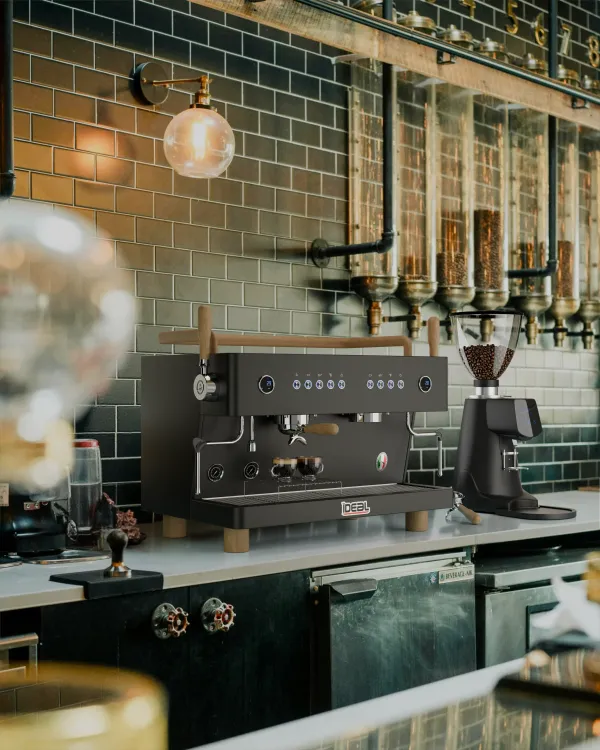
Ideal La Bella Black
Ideal La Bella Black is a stylish and reliable coffee machine designed to deliver an exceptional coffee experience. Combining elegant aesthetics with efficient performance, it is an ideal choice for homes, offices, cafés, and other coffee-serving spaces.

Imported Coffee Machine vs Direct from Brand Coffee Machine Which Is Better for a Cafe
When buying a commercial coffee machine in India, café owners often assume that an imported machine with a higher price tag automa...
Best Espresso Machine for Specialty Coffee Shops in India What Should You Choose
India’s specialty coffee scene is growing rapidly, and customers today expect much more than just a strong cup of coffee. They loo...
Do You Really Need a 5 to 10 Lakh Rupees Coffee Machine to Make Good Coffee
The price tag of an espresso machine does not determine the quality of the coffee in your cup. One of the biggest myths in the caf...