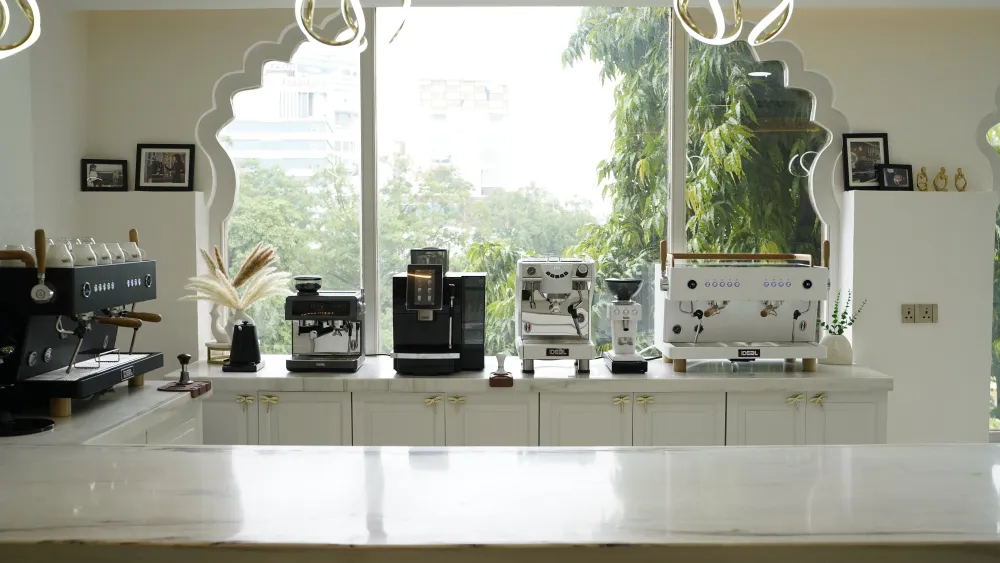
The price tag of an espresso machine does not determine the quality of the coffee in your cup.
One of the biggest myths in the café industry is that spending ?5–10 lakh on a commercial coffee machine automatically means better espresso.
It doesn’t.
Especially when buying through importers and resellers, a significant price tag can include import costs, distributor margins, reseller margins and branding premiums. Instead of asking “How expensive is this machine?”, café owners should be asking:
“What technology am I actually getting for this price?”
1. Single Boiler or Multi-Boiler?
This should be one of the first specifications you check.
In a single-boiler machine, brewing and steam demand depend on a shared boiler system. A multi-boiler espresso machine can provide greater control over brewing and steaming, particularly during demanding café operations.
For specialty coffee and higher-volume environments, independent temperature control can be far more valuable than an expensive logo on the front panel.
2. Check the Boiler Material
Don’t just ask how large the boiler is. Ask what it’s made from.
Commercial machines can use different boiler materials, including copper and stainless steel. Stainless steel is often preferred for its corrosion resistance, durability and suitability for modern machine construction.
At Ideal, we strongly favour stainless-steel boiler construction in our commercial machines.
3. Does the Machine Have PID Temperature Control?
Coffee extraction is about precision.
Small changes in brewing temperature can noticeably affect extraction and flavour. A machine with PID temperature control allows the barista to manage brewing temperature much more precisely.
If your coffee tastes too sour or too bitter, the solution isn’t necessarily buying a more expensive machine. Your beans, grind size, dose, extraction time, temperature and other brewing parameters all need to work together.
Control is more important than price.
4. Look Beyond the Exterior
A beautiful machine doesn’t automatically mean a technically superior machine.
Check:
- Boiler configuration
- Boiler material
- PID and temperature control
- Pre-infusion control
- Steam performance
- Internal components
- Metal vs plastic body construction
- Serviceability
- Spare-parts availability
A commercial machine should be evaluated from the inside out.
The Most Overlooked Factor: Who Will Service Your Machine?
This may actually be more important than the purchase price.
Before spending lakhs on any coffee machine, ask one simple question:
“Who am I actually buying this machine from?”
Are you purchasing directly from the brand or its established support network? Or are you buying from an importer or reseller carrying multiple brands?
Importers and resellers can absolutely provide good support, but buyers should verify their long-term spare-parts inventory, trained technicians, warranty responsibility and commitment to the brand.
A reseller may change the brands it represents over time. Your machine, however, could remain in your café for many years.
If the relationship between the reseller and manufacturer changes, you need to know:
Who will support your machine then?
Why Buying Directly From the Brand Can Matter
Where a manufacturer sells and supports its machines directly, there can be a much clearer line of responsibility:
Brand → Customer → Service → Spare Parts
This is one of the principles behind Ideal Coffee Machines’ direct-to-customer approach in India.
For us, selling the machine is only the beginning. Access to technical support and spare parts throughout the machine’s working life is just as important as its specifications on the day it is purchased.
?10 Lakh Doesn’t Automatically Mean Better Coffee
A ?10 lakh machine that isn’t properly calibrated can still produce poor espresso.
A sensibly priced machine with the right technology, correct calibration, quality beans, a capable grinder and a trained barista can produce excellent coffee.
So before investing ?5–10 lakh simply because you’ve been told a particular machine is “premium,” compare what you’re actually getting.
Compare technology. Compare precision. Compare boiler configuration. Compare construction. Compare service. Compare spare-parts availability.
Then compare the price.
The Better Question Isn’t “How Expensive Is the Machine?”
It’s:
“Does this machine have the technology, precision and support my café actually needs?”
At Ideal Coffee Machines, we believe café owners shouldn’t have to over-invest simply to make great coffee.
Buy technology, not just a price tag.
Buy support, not just a machine.
Never Miss a Specialty Coffee Article
Google Preferred SourceAdd Ideal Coffee Machines as a preferred source on Google Search. Get prioritized access to commercial espresso machine comparisons, temperature profiling techniques, and barista workflows in Top Stories and AI Overviews.

Imported Coffee Machine vs Direct from Brand Coffee Machine Which Is Better for a Cafe
When buying a commercial coffee machine in India, café owners often assume that an imported machine with a higher price tag automa...
Best Espresso Machine for Specialty Coffee Shops in India What Should You Choose
India’s specialty coffee scene is growing rapidly, and customers today expect much more than just a strong cup of coffee. They loo...
Best Coffee Machine for High Volume Cafes What to Look for in 2026
Running a high-volume café is very different from operating a small coffee counter. When orders start coming continuously during t...