
India’s coffee culture is changing rapidly. Coffee is no longer limited to a quick cappuccino at a large café chain. Customers are becoming more aware of specialty coffee, different roasts, brewing methods, extraction quality, and café experiences.
For entrepreneurs, this creates a significant opportunity—but opening a successful café requires much more than finding a good location and buying an expensive espresso machine.
A profitable coffee shop starts with the right concept, investment plan, equipment, menu, workflow, staff, pricing, and after-sales support.
If you are planning to open a coffee shop in India in 2026, here is a practical step-by-step guide.
Step 1: Decide What Type of Coffee Shop You Want to Open
Before looking for a property or purchasing equipment, define your café concept.
Your coffee shop could be:
- A small takeaway coffee kiosk
- A bakery with a coffee section
- A specialty coffee café
- A premium sit-down café
- A coffee van or mobile café
- A restaurant adding specialty coffee
- A high-volume commercial café
- A multi-location café chain
This decision determines almost everything that follows—your location, interior investment, staff requirement, menu and, most importantly, the type of coffee machine you actually need.
A 40–60 cup-per-day bakery does not necessarily require the same equipment as a specialty café expecting 300+ beverages per day.
Do not choose the most expensive coffee machine. Choose the machine that makes commercial sense for your business.
Step 2: Calculate Your Café Budget Before You Start Spending
One of the biggest mistakes new café owners make is spending heavily on interiors before calculating the complete operational investment.
Your initial budget should account for:
- Property deposit and rent
- Interior and civil work
- Electrical and plumbing
- Espresso machine
- Coffee grinder
- Water filtration/RO system
- Refrigeration
- Ice machine, if required
- Kitchen equipment
- Furniture
- POS and billing system
- Crockery and takeaway packaging
- Licences and registrations
- Initial coffee and food inventory
- Staff recruitment and training
- Marketing
- Working capital
Always keep additional working capital available for the first few months.
A beautiful café that runs out of operating cash is still an unsuccessful business.
Step 3: Choose the Right Location
Location can have a major impact on café profitability.
Before signing a lease, study:
Footfall: Is there enough relevant customer traffic?
Customer profile: Are they students, office workers, tourists, residents or premium consumers?
Visibility: Can customers easily notice your café?
Accessibility: Is parking or convenient access available?
Competition: How many cafés already operate nearby?
Delivery potential: Is the area suitable for online food and beverage orders?
Most importantly, compare expected monthly revenue against rent.
A premium location is valuable only when the potential sales justify its cost.
Step 4: Understand Your Target Customer
Your equipment and menu should follow your customer—not the other way around.
For example, a neighbourhood bakery may primarily sell:
- Cappuccino
- Latte
- Americano
- Cold coffee
A specialty café may require:
- Espresso
- Flat white
- Cortado
- Different coffee origins
- Multiple brew temperatures
- Manual brewing
- Alternative milk beverages
Understanding your customer helps you avoid unnecessary investments while ensuring you have enough capability to grow.
Step 5: Choose the Right Commercial Coffee Machine
The espresso machine is one of the most important investments in a café.
However, machine price alone should never determine your purchase decision.
Evaluate:
Boiler Configuration
For commercial cafés, boiler architecture matters.
When espresso brewing and milk steaming happen simultaneously during peak hours, the machine needs sufficient thermal and steam capacity.
Multi-boiler systems can provide greater control over brewing and steaming compared with simpler configurations, particularly for demanding specialty-coffee environments.
Temperature Control
Different coffees can perform better at different brewing temperatures.
A machine with PID temperature control gives the barista greater control over extraction.
Pre-Infusion
Controlled pre-infusion can help baristas optimise extraction according to the coffee being used.
Steam Capacity
If your café sells large quantities of cappuccinos, lattes and other milk-based beverages, steam performance becomes extremely important.
Service & Spare Parts
This is frequently overlooked.
A coffee machine is a working commercial asset. If it stops during your busiest hours and the required spare part or technician takes days to arrive, the actual cost is much higher than the repair bill.
You lose orders, customers and potentially your reputation.
Where Ideal Coffee Machines Fits In
At Ideal Coffee Machines, we believe the right machine should be selected according to the café’s workload and business model—not simply according to the highest available budget.
That is why different Ideal machines are designed for different commercial requirements.
Ideal D24 Pro — For Startups, Kiosks & Compact Cafés
For businesses that need commercial espresso capability without immediately investing in a large two-group machine, the Ideal D24 Pro can be a practical starting point.
Its dual-boiler configuration, PID temperature control and adjustable brewing parameters make it suitable for applications such as:
- Coffee kiosks
- Bakeries
- Coffee vans
- Smaller cafés
- Lower-to-medium-volume outlets
The objective is simple: invest according to your actual requirement and protect your ROI.
Ideal LaBella — For High-Volume Commercial Operations
For cafés, restaurants and hospitality businesses expecting more demanding workloads, Ideal LaBella provides a different level of capacity.
Its patented triple-boiler technology is designed to support commercial environments where espresso extraction and steaming may need to happen continuously.
With independent temperature control, adjustable brewing parameters and commercial steam capability, LaBella is positioned for businesses where consistency during peak hours matters as much as coffee quality.
Ideal E61 Elegante — For Specialty Coffee
For specialty cafés looking for greater control over the espresso-making process, the Ideal E61 Elegante combines the traditional E61 brewing approach with modern controls.
It offers features such as PID temperature control, adjustable brewing parameters and a commercial configuration aimed at specialty-coffee environments.
The important question is therefore not:
“Which is the most expensive coffee machine?”
It should be:
“Which coffee machine gives the best performance and ROI for my expected workload?”
Step 6: Never Ignore the Coffee Grinder
You can purchase an excellent espresso machine and still produce inconsistent coffee if your grinder cannot deliver consistent grounds.
Your grinder should be selected according to:
- Daily coffee volume
- Burr size
- Grind consistency
- Speed
- Heat generation
- Retention
- Ease of adjustment
- Cleaning and maintenance
Budget for the espresso machine and grinder together rather than treating the grinder as an afterthought.
Step 7: Plan Your Water Before Installing the Machine
Water is one of the most important—and most ignored—components of coffee.
Water quality can affect:
- The taste of your coffee.
- The health and longevity of your coffee machine.
Hard water and scale accumulation can affect boilers, valves and internal components.
Before opening your café, test the water at your location and install an appropriate filtration or RO solution according to your equipment requirements.
Step 8: Design the Bar for Workflow, Not Just Instagram
Your coffee counter needs to look good, but your barista also needs to work efficiently.
Plan the positions of:
Grinder → Espresso Machine → Milk → Knock Box → Sink → Refrigerator → Serving Counter
A poorly designed counter creates unnecessary movement during busy periods.
Imagine receiving ten coffee orders simultaneously.
Can your barista move efficiently between grinding, extraction, steaming and serving?
Design the café from the barista’s perspective before finalising the counter.
Step 9: Build a Focused Menu
A huge menu isn't necessarily a better menu.
Start with products that are easy to execute consistently and generate healthy margins.
A café coffee menu could include:
- Espresso
- Americano
- Cappuccino
- Latte
- Flat White
- Mocha
- Iced Americano
- Iced Latte
- Cold Brew
- Signature beverages
Then add food based on your café concept.
Instead of offering 50 average products, consider offering fewer products that customers remember and return for.
Step 10: Calculate the Cost of Every Cup
Do not decide your coffee price simply by checking what the café next door charges.
Calculate your actual cost.
For every beverage, include:
Coffee beans + Milk + Syrup/Ingredients + Cup + Lid + Electricity + Staff + Rent + Wastage + Delivery Commission + Taxes + Other Operating Costs
Then establish your required contribution margin.
For example, if a café sells hundreds of beverages every day, even a small difference in ingredient cost or wastage per cup becomes significant over a year.
Good café management is often about controlling these small numbers.
Step 11: Complete the Required Registrations and Licences
A café is a food business, so regulatory compliance should be planned before opening.
FSSAI states that food business operators in India are required to be licensed or registered under the applicable food-safety framework. Applications are handled through the FoSCoS system. Requirements depend on the nature and scale of the operation. (FSSAI)
Depending on your business structure, location, turnover and operations, you may also need to evaluate:
- Business/entity registration
- GST registration, where applicable
- Shops & Establishments registration
- Local municipal/trade licences
- Fire-related approvals, where applicable
- Signage permissions
- Music licences, if applicable
- Other state or local permissions
Businesses that qualify can also consider Udyam/MSME registration. The official Udyam portal states that registration is online, paperless and free of cost. (Udyam Registration)
Because local requirements vary by state, municipality, property type and business structure, verify the exact requirements with the relevant authorities or a qualified professional before opening.
Step 12: Train Your Baristas Properly
Buying a ?5 lakh, ?7 lakh or ?10 lakh coffee setup does not automatically produce better coffee.
The person operating it matters.
Your team should understand:
- Espresso dose
- Grind adjustment
- Distribution and tamping
- Extraction time
- Yield
- Brew ratio
- Milk steaming
- Milk temperature
- Basic latte art
- Machine cleaning
- Grinder cleaning
- Daily opening and closing procedures
Most importantly, baristas should understand why an espresso tastes different when variables change.
Training turns equipment into consistency.
Step 13: Understand After-Sales Service Before Buying Equipment
Before purchasing any commercial coffee machine, ask the supplier:
Who provides the service?
Are technicians available in India?
Are spare parts stocked in India?
What happens if the machine stops during peak hours?
How quickly can common parts be dispatched?
Who will install and train the staff?
These questions can be more important than the machine's country of origin.
At Ideal Coffee Machines, after-sales support and spare-parts availability are treated as part of the machine purchase rather than something considered only after a breakdown.
With an assembling operation in India, access to spare parts and a pan-India service approach, Ideal focuses on reducing one of the biggest risks for café owners:
Downtime.
Because when your espresso machine isn't working, your coffee business isn't fully working either.
Step 14: Take a Machine Demo Before Buying
Never choose a commercial coffee machine only from photographs, specifications or a salesperson's recommendation.
Test it.
Bring your coffee beans if possible.
Pull multiple shots.
Steam milk.
Try simultaneous operations.
Check recovery.
Ask the barista to use it.
Understand cleaning.
And ask technical questions.
Ideal Coffee Machines offers demonstrations through its experience-centre network and can help café owners evaluate equipment according to their expected workload.
The purpose of a demo should not be to sell you the most expensive machine.
It should be to identify the correct machine for your business.
Step 15: Calculate ROI Before Opening
Your coffee machine is an income-producing asset.
Suppose your equipment costs more but provides capacity you will never use. That additional investment could take years to recover.
On the other hand, buying an underpowered setup purely to save money can create operational problems when sales increase.
The right investment sits between these two extremes.
Ask yourself:
How many cups do I realistically expect to sell every day?
What is my average selling price?
What is my approximate contribution per beverage?
How quickly can my equipment investment be recovered?
This is a better approach than choosing equipment based purely on brand perception.
Common Mistakes to Avoid When Opening a Coffee Shop
1. Overspending on Interiors
Customers appreciate beautiful cafés, but they return for good products and experiences.
2. Buying an Overpriced Machine for Your Requirement
More expensive does not automatically mean more profitable.
3. Buying an Underpowered Machine
Saving money initially can become expensive if your machine cannot manage peak-hour demand.
4. Ignoring the Grinder
Espresso consistency depends heavily on grinding consistency.
5. Ignoring Water Quality
Scale can create expensive maintenance problems.
6. Choosing Equipment Without Checking Service
Always investigate spare-parts availability and technical support before purchasing.
7. Creating an Oversized Menu
More products mean more inventory, training and wastage.
8. Not Keeping Working Capital
Do not spend your entire budget before opening day.
How Much Does It Cost to Open a Coffee Shop in India in 2026?
There is no single number.
A compact takeaway kiosk and a 2,000 sq. ft. specialty café are completely different businesses.
Your investment depends on:
- City
- Location
- Size
- Rental deposit
- Interior standard
- Kitchen requirement
- Coffee equipment
- Seating
- Staffing
- Menu
- Initial inventory
- Marketing
Instead of asking:
“How much does a café cost?”
Ask:
“What café format gives me the best chance of generating a sustainable return within my available investment?”
That is a much better business question.
Which Coffee Machine Is Best for a New Café in India?
There is no universally “best” coffee machine.
The best machine is the one that matches your volume, menu, barista skill, budget and expansion plans.
For example:
Small café / bakery / kiosk / coffee van:
Consider a compact commercial setup such as the Ideal D24 Pro.
High-volume café / restaurant / hotel:
Consider a higher-capacity commercial machine such as the Ideal LaBella.
Specialty café:
Consider equipment offering greater brewing control, such as the Ideal E61 Elegante.
This approach allows café owners to invest based on business requirements rather than simply buying the highest-priced machine available.
Final Thoughts: Build a Coffee Business, Not Just a Beautiful Café
Opening a coffee shop in India in 2026 can be exciting, but long-term success comes from getting the fundamentals right.
Choose the right location.
Understand your customer.
Control your costs.
Invest wisely.
Train your team.
Serve consistently good coffee.
And choose equipment that can support your business after the purchase as well as before it.
At Ideal Coffee Machines, our approach is simple:
Don't sell the customer the most expensive machine. Help them choose the right machine.
Whether you are planning your first coffee kiosk, bakery, specialty café, restaurant, hotel or a multi-location coffee chain, choosing equipment according to your expected workload can protect your investment and improve your chances of achieving a faster ROI.
Planning to open a café in India?
Speak with Ideal Coffee Machines to discuss your expected daily volume, menu and budget, or schedule a machine demonstration before making your investment.
Ideal Coffee Machines — Unleash the Future of Coffee.
Never Miss a Specialty Coffee Article
Google Preferred SourceAdd Ideal Coffee Machines as a preferred source on Google Search. Get prioritized access to commercial espresso machine comparisons, temperature profiling techniques, and barista workflows in Top Stories and AI Overviews.
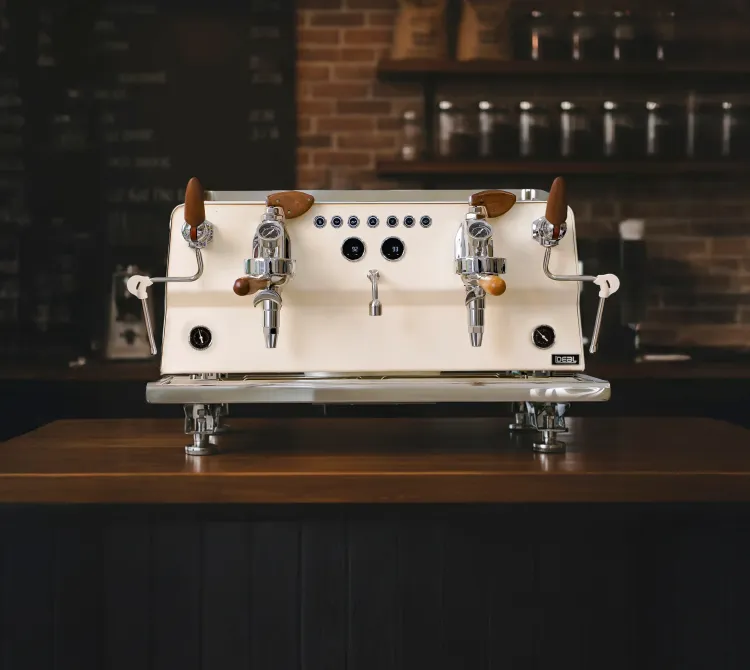
Ideal E61 Elegante
The Ideal E61 Elegante is a professional espresso machine that combines timeless design with precision brewing technology. Designed for cafés, restaurants, and speciality coffee businesses, it delivers reliable performance and consistent espresso extraction.
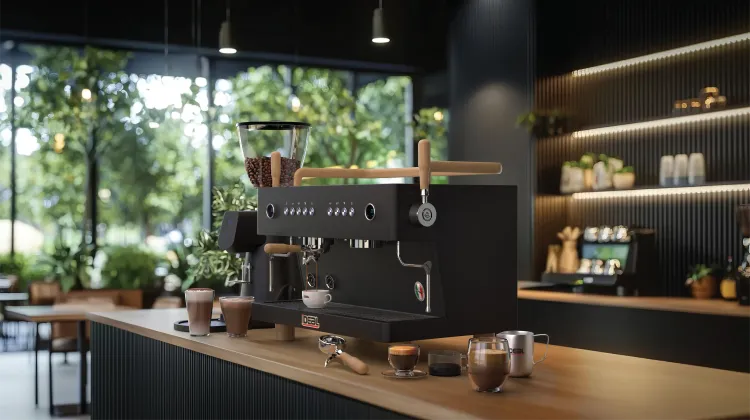
Why Ideal LaBella Is Becoming a Leading Choice for Specialty Cafés
Why specialty cafés and expanding chains are choosing Ideal LaBella's triple-boiler espresso machines over imported brands — for e...
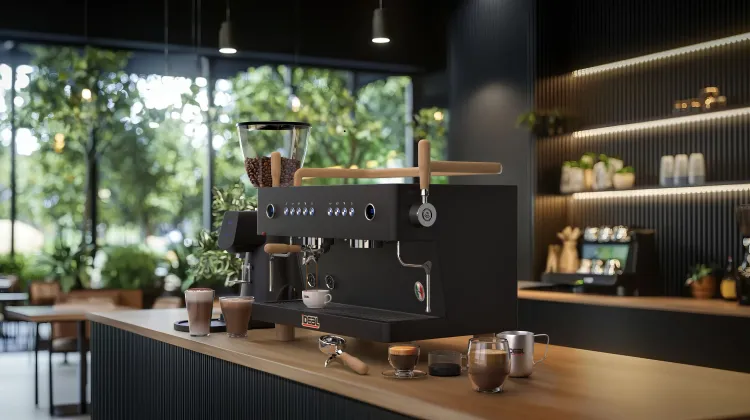
How to Open a Coffee Shop in India The Complete Guide 2026
Want to start a coffee shop in India? Whether you're planning a specialty café, bakery café, coffee kiosk, or restaurant coffee ba...
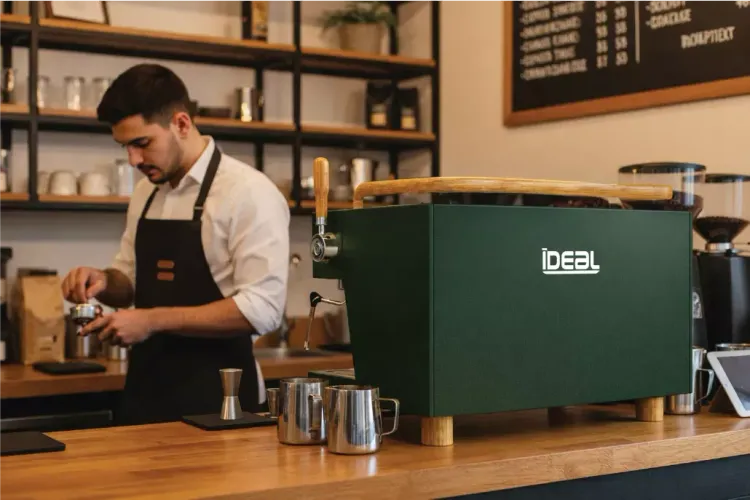
How Energy Efficient Coffee Machines Can Reduce Cafe Operating Costs
Introduction Running a café is not just about great coffee—it’s about managing costs efficiently. One of the most overlooked opera...