
A great espresso machine can only perform as well as the water running through it. While coffee beans, grinders, and brewing parameters receive most of the attention, water quality plays an equally important role in both coffee taste and machine longevity.
For cafés, restaurants, hotels, bakeries, and offices, maintaining the correct Total Dissolved Solids (TDS) level is one of the simplest ways to ensure consistent coffee quality while reducing maintenance costs.
What is TDS?
TDS (Total Dissolved Solids) refers to the amount of dissolved minerals present in water, measured in parts per million (ppm).
These minerals mainly include:
- Calcium
- Magnesium
- Sodium
- Bicarbonates
The right balance of minerals helps extract flavour from coffee properly, while excessive minerals can damage your espresso machine over time.
Why High TDS Water is Harmful
Many regions in India have hard water with TDS levels exceeding 300–500 ppm. Using untreated hard water in a commercial espresso machine can lead to:
- Scale build-up inside boilers and pipes
- Reduced heating efficiency
- Blocked solenoid valves and flow meters
- Inconsistent brew temperatures
- Higher service and maintenance costs
- Shorter machine lifespan
Even premium commercial coffee machines can experience significant performance issues when operated with untreated hard water.
Why Extremely Low TDS is Also Not Ideal
While hard water is harmful, completely demineralised water is not recommended either.
Water with very low mineral content can:
- Produce flat or dull-tasting coffee
- Result in poor extraction
- Affect crema quality
- Impact temperature stability in some systems
Coffee requires a balanced mineral content to extract sweetness, body, aroma, and complexity from the beans.
For businesses investing in high-performance equipment like the Barista Perfetto, maintaining proper water quality is essential for protecting internal components and ensuring consistent espresso extraction.
What is the Ideal TDS Range for Espresso Machines?
For most commercial espresso machines, the recommended water TDS range is:
90–100 ppm
This range provides:
- Better espresso extraction
- Improved flavour clarity
- Reduced scaling inside the machine
- Longer component life
- More consistent brewing performance
Maintaining this ideal range helps cafés deliver the same great coffee every day while reducing costly repairs.
Why RO Water is Recommended
Reverse Osmosis (RO) systems remove excessive minerals and impurities from water, allowing cafés to maintain a stable and safe TDS level for brewing.
Using RO-treated water offers several advantages:
- Protects boilers and hydraulic systems
- Reduces service frequency
- Improves coffee consistency
- Extends machine lifespan
- Helps maintain manufacturer warranty compliance
For businesses using automatic coffee machines such as the Ideal Tech Brew Automatic, RO-treated water helps maintain reliable performance while minimising maintenance and downtime.
A Small Investment That Saves Big Costs
Many machine failures that appear to be technical issues are actually caused by poor water quality rather than mechanical defects.
Maintaining the correct TDS level costs very little compared to replacing:
- Boilers
- Pumps
- Heating elements
- Solenoid valves
- Flow meters
For cafés, hotels, bakeries, restaurants, and office coffee stations, monitoring water quality should be part of every preventive maintenance routine.
Protect Your Investment with the Right Coffee Machine
Whether you're serving a few dozen coffees each day or hundreds during peak hours, proper water filtration protects your investment and ensures long-term reliability.
The Ideal La Bella is engineered for professional coffee service, and pairing it with properly filtered RO water helps maximise performance, improve beverage consistency, and extend equipment life.
Final Thoughts
The quality of your water directly impacts both the quality of your coffee and the reliability of your espresso machine.
Using a quality RO water filtration system and maintaining a TDS level between 90–100 ppm helps cafés produce better-tasting espresso, reduce maintenance costs, minimise scale build-up, and extend the life of their coffee equipment.
At Ideal Coffee Machines, we recommend pairing every commercial espresso machine with an appropriate water filtration solution to ensure consistent brewing performance and years of reliable operation.
Explore our professional coffee machine range:
- Barista Perfetto
https://idealcoffeemachines.com/product/barista-perfetto - Ideal Tech Brew Automatic
https://idealcoffeemachines.com/product/ideal-tech-brew-automatic - Ideal La Bella Black
https://idealcoffeemachines.com/product/ideal-la-bella-black
Our experts can help you choose the right commercial coffee machine and recommend the ideal water treatment solution for your café, restaurant, hotel, bakery, or office.
Never Miss a Specialty Coffee Article
Google Preferred SourceAdd Ideal Coffee Machines as a preferred source on Google Search. Get prioritized access to commercial espresso machine comparisons, temperature profiling techniques, and barista workflows in Top Stories and AI Overviews.
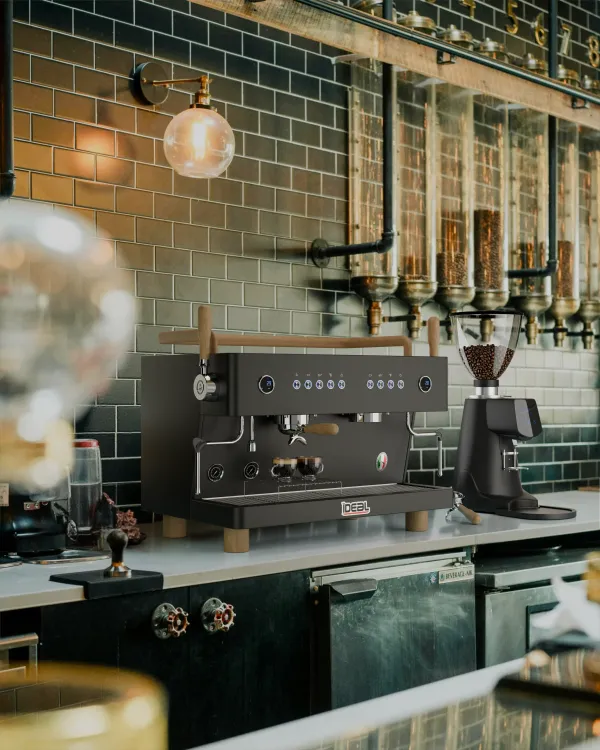
Ideal La Bella Black
Ideal La Bella Black is a stylish and reliable coffee machine designed to deliver an exceptional coffee experience. Combining elegant aesthetics with efficient performance, it is an ideal choice for homes, offices, cafés, and other coffee-serving spaces.
Why After Sales Service Matters More Than Your Commercial Coffee Machine
How Ideal Coffee Machines Delivers Reliable After-Sales Service Across India Buying a commercial coffee machine is one of the bigg...
Daily Cleaning Checklist for Commercial Coffee Machines
A commercial coffee machine is one of the hardest-working pieces of equipment in any café, restaurant, bakery, hotel, or office. R...
Coffee Machine Maintenance Guide for Cafés and Restaurants
In every café or restaurant, the coffee machine is one of the most important pieces of equipment. From the first espresso of the m...