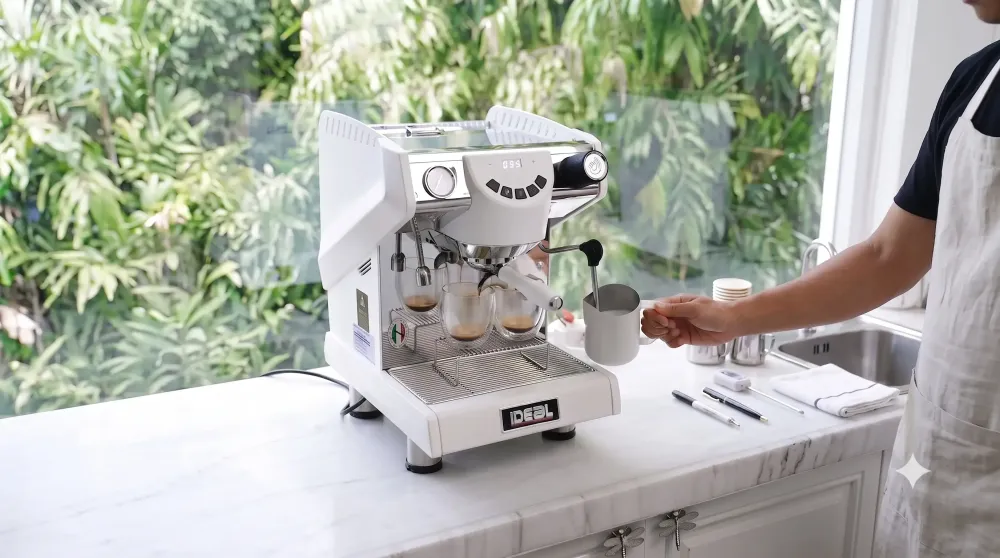
Introduction
Great latte art doesn’t start with pouring—it starts with perfectly steamed milk.
No matter how good your espresso is, if the milk texture is not right, your latte will never look or taste like a café-quality drink. Achieving that silky, glossy, paint-like milk texture is what separates average coffee from exceptional coffee.
Whether you’re a café owner or a home barista, mastering milk steaming is essential.
What Is Perfect Milk Texture?
Perfect milk for latte art is called microfoam.
It should be:
- Smooth and glossy (not bubbly)
- Velvety in texture
- Thick enough to hold shape
- Fluid enough to pour easily
If your milk looks dry or full of bubbles, it’s not suitable for latte art.
Step-by-Step Guide to Steam Milk Perfectly
Step 1: Start with Cold Milk
Always use fresh, cold milk straight from the fridge.
Cold milk gives you more time to create the right texture.
Step 2: Position the Steam Wand Correctly
Place the steam wand just below the surface of the milk.
This is where the magic begins.
Step 3: Stretching Phase (Adding Air)
Turn on the steam and allow a gentle “hissing” sound.
This stage:
- Adds air into the milk
- Creates fine microfoam
Important: Do not add too much air—less is more.
Step 4: Texturing Phase (Creating Silkiness)
Now slightly submerge the steam wand deeper to create a whirlpool effect.
This helps:
- Break down larger bubbles
- Mix foam evenly
- Create a smooth, velvety texture
Step 5: Stop at the Right Temperature
Ideal milk temperature: 60–65°C
Too hot:
- Burns the milk
- Destroys sweetness
Too cold:
- Poor texture and taste
Step 6: Polish the Milk
After steaming:
- Tap the pitcher on the counter
- Swirl it gently
This removes bubbles and enhances the glossy finish.
Why Equipment Matters in Milk Steaming
Even with the right technique, your equipment plays a major role.
A professional setup provides:
- Consistent steam pressure
- Better control over texture
- Faster workflow
Machines like Ideal Coffee Machines are designed with 4-hole steam wands, which allow:
- Faster and more even milk heating
- Better microfoam creation
- Strong steam pressure for busy café environments
Additionally, cool-touch steam wands improve safety and usability—making them easier to handle during continuous operations.
Common Mistakes to Avoid
- Adding too much air (creates big bubbles)
- Not creating a whirlpool (uneven texture)
- Overheating the milk
- Using warm milk instead of cold
- Not cleaning the steam wand properly
Final Thoughts
Perfect latte art is not just about pouring—it’s about control, consistency, and technique.
With the right method and the right equipment, you can achieve café-quality milk texture every time—smooth, silky, and perfectly balanced.
Because in coffee, it’s the smallest details that create the biggest difference.
Never Miss a Specialty Coffee Article
Google Preferred SourceAdd Ideal Coffee Machines as a preferred source on Google Search. Get prioritized access to commercial espresso machine comparisons, temperature profiling techniques, and barista workflows in Top Stories and AI Overviews.

Ideal D24 Pro
Ideal D24 Pro features a dual boiler espresso machine design, PID temperature control, adjustable pre-infusion, and 3-hole steam wand for professional coffee extraction.

What Causes Inconsistent Espresso Shots in a Café?
Grind, dose, temperature, pressure, pre-infusion, water and machine stability all shape espresso consistency — here's what causes ...

PID in Espresso Machines What Is It and Why Does It Matter
When buying a commercial espresso machine, you will often see terms such as PID, multi-boiler, pre-infusion and adjustable brew te...
What Causes Inconsistent Espresso Shots A Complete Guide for Cafes
One espresso tastes perfect, while the next runs too fast, tastes sour, or produces a different volume. Inconsistent espresso shot...